Logical Thinking
Logical thinking is using the constraints — 4 words per group, a finished group means something — to narrow down where words go.
What Is Logical Thinking?
- The game is full of logical signals: if a theme already has 4 words it is closed, so the next word must belong elsewhere.
- On bigger boards, elimination and the process of ruling boxes out is how you keep control.
How It Appears in Puzzles
- With 8+ themes open, you reason "this word is not food, not an animal, not a shape — so it must be...".
- A word that fits two themes forces a deduction about which theme is already full.
Common Patterns
- Completed groups act as solved constraints that simplify everything else.
- The 4-word rule turns every placement into a small logic puzzle.
Examples
- if animals already holds 4 words, the next animal word must belong to a different open theme.
Tips
- Work in passes: place the certain words, close full groups, then revisit the doubtful ones.
Related Levels
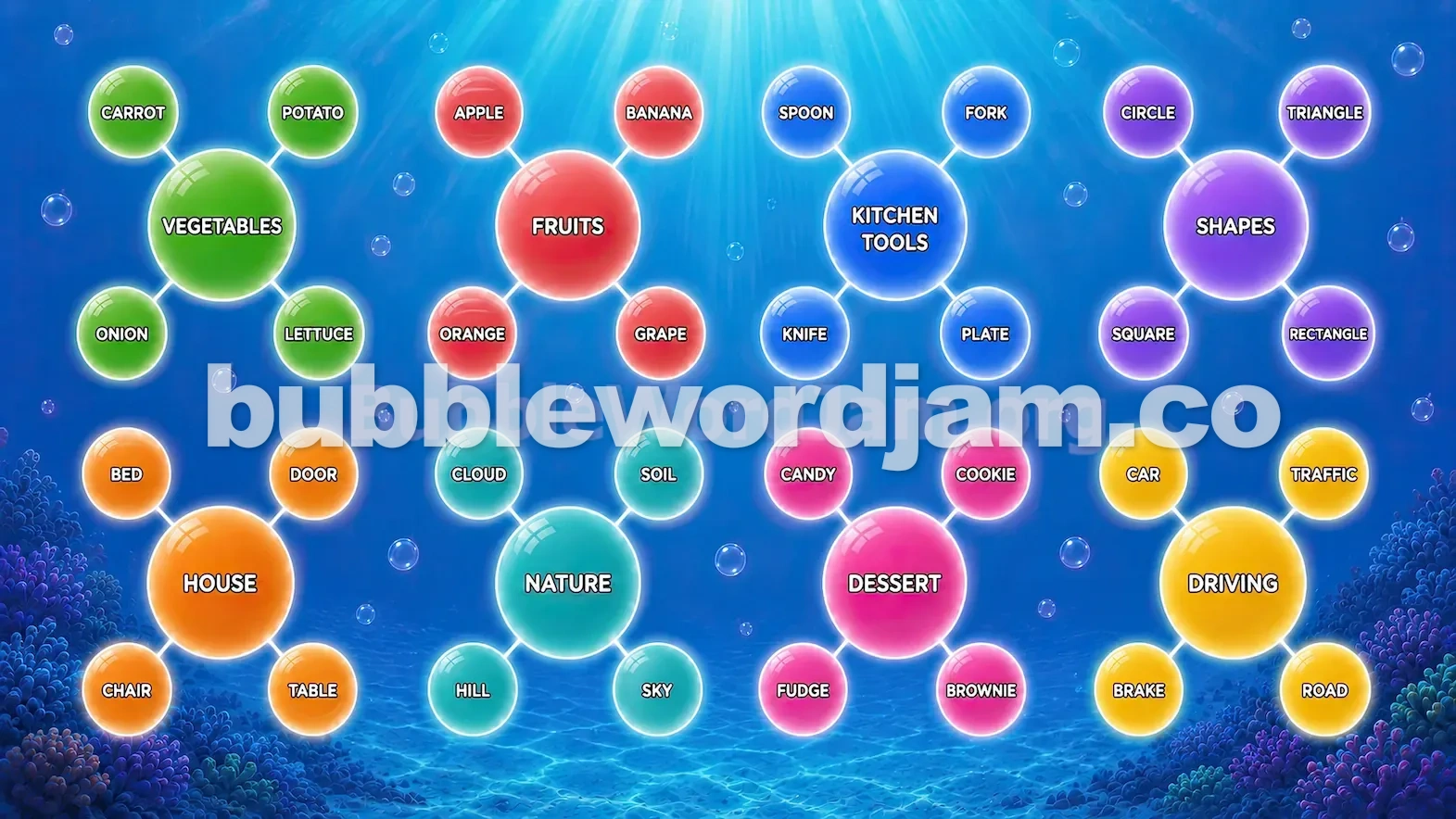 Level 2
Sort 32 words into 8 categories
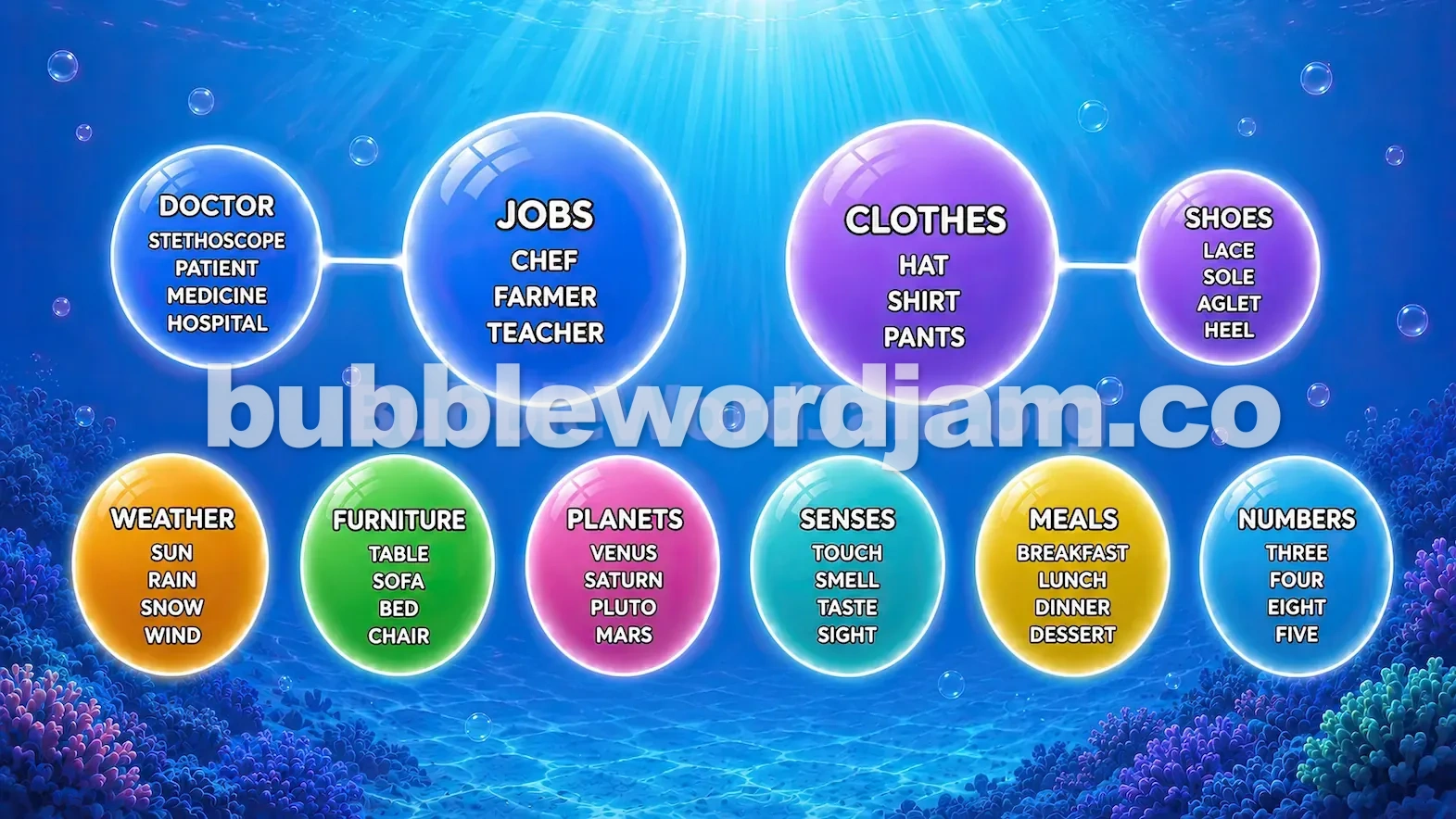 Level 4
Sort 32 words into 8 categories
 Level 5
Sort 36 words into 9 categories
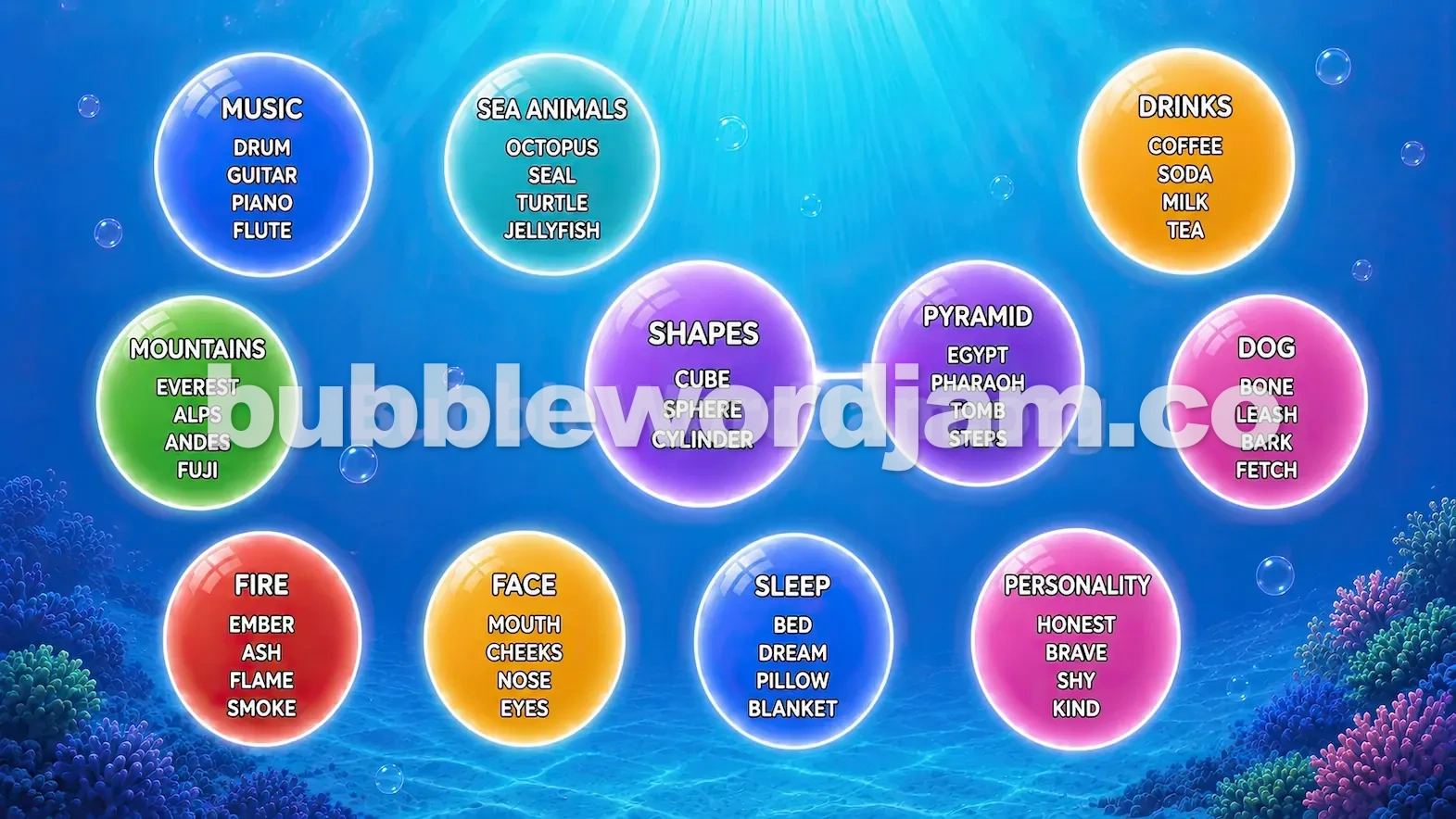 Level 6
Sort 40 words into 10 categories
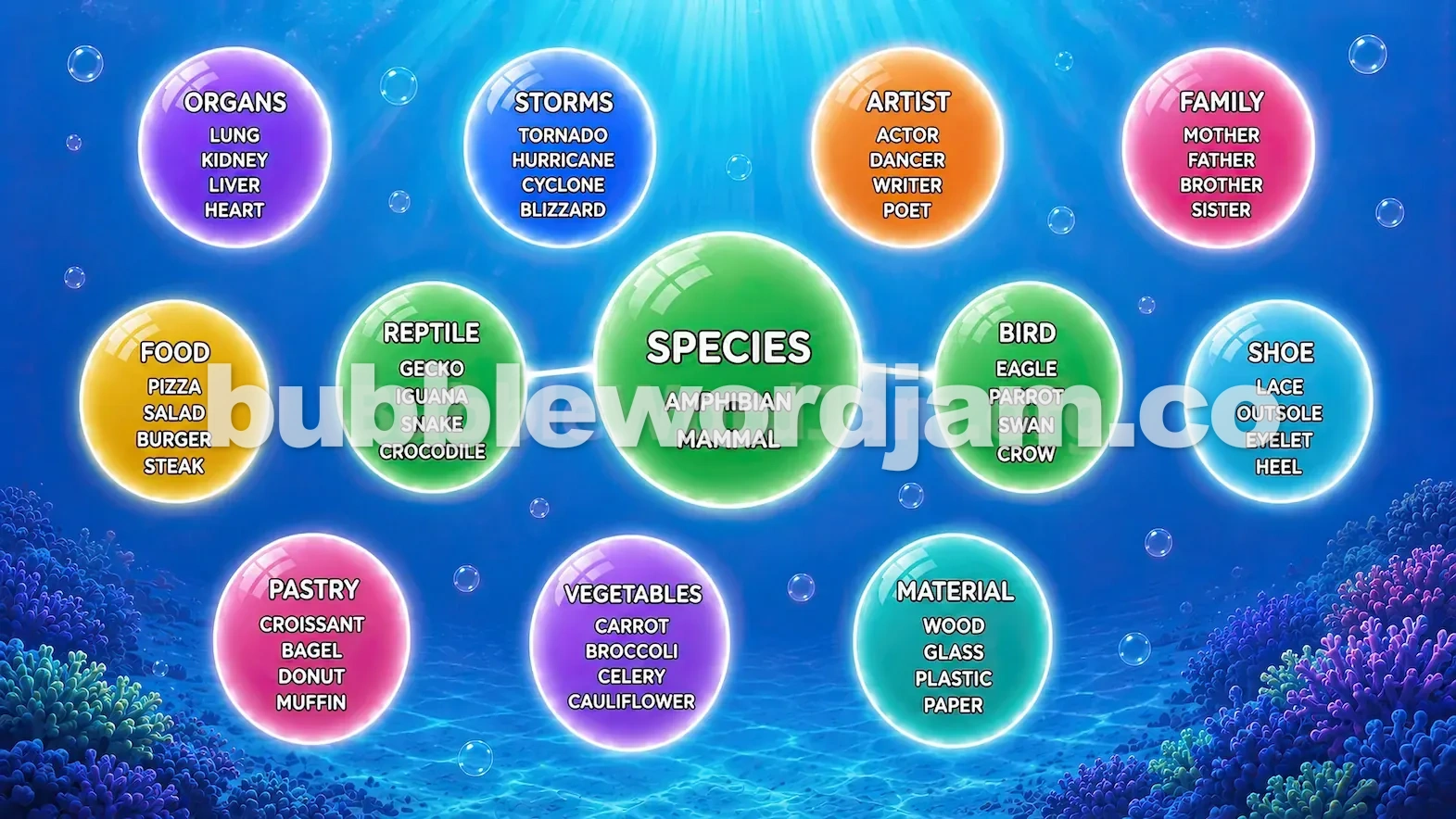 Level 8
Sort 40 words into 10 categories
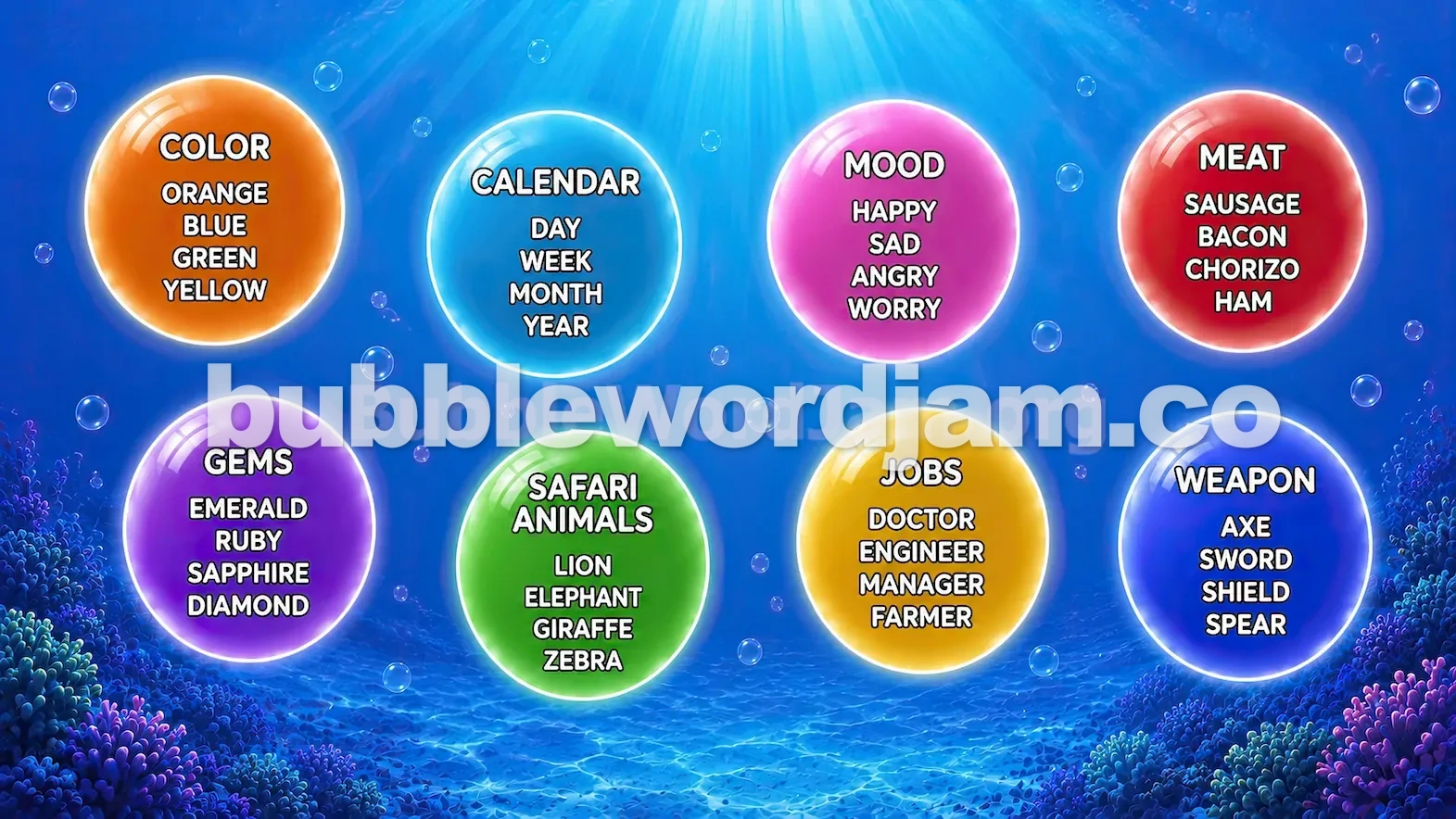 Level 10
Sort 32 words into 8 categories
 Level 124
Sort 32 words into 8 categories
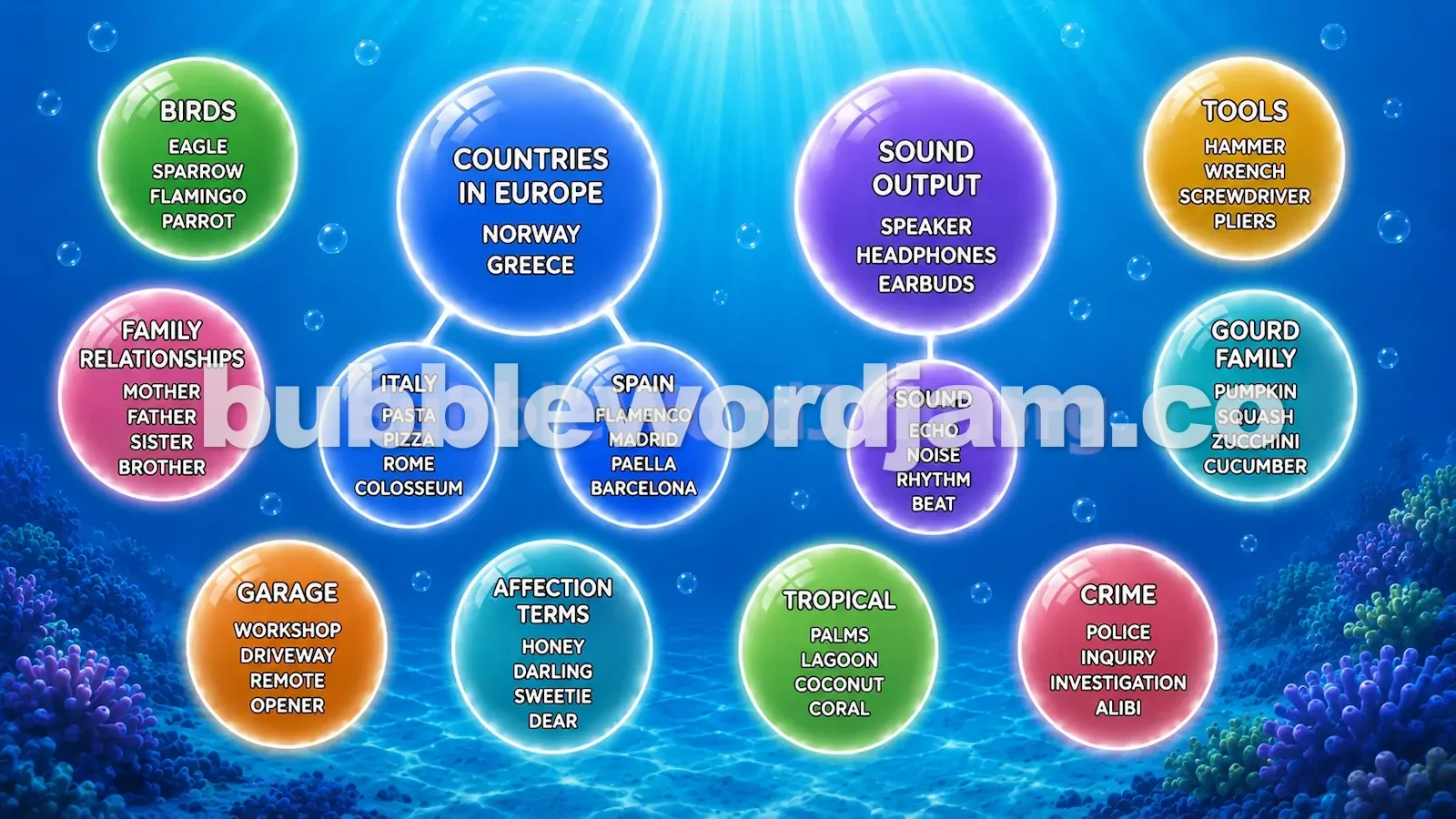 Level 137
Sort 40 words into 10 categories
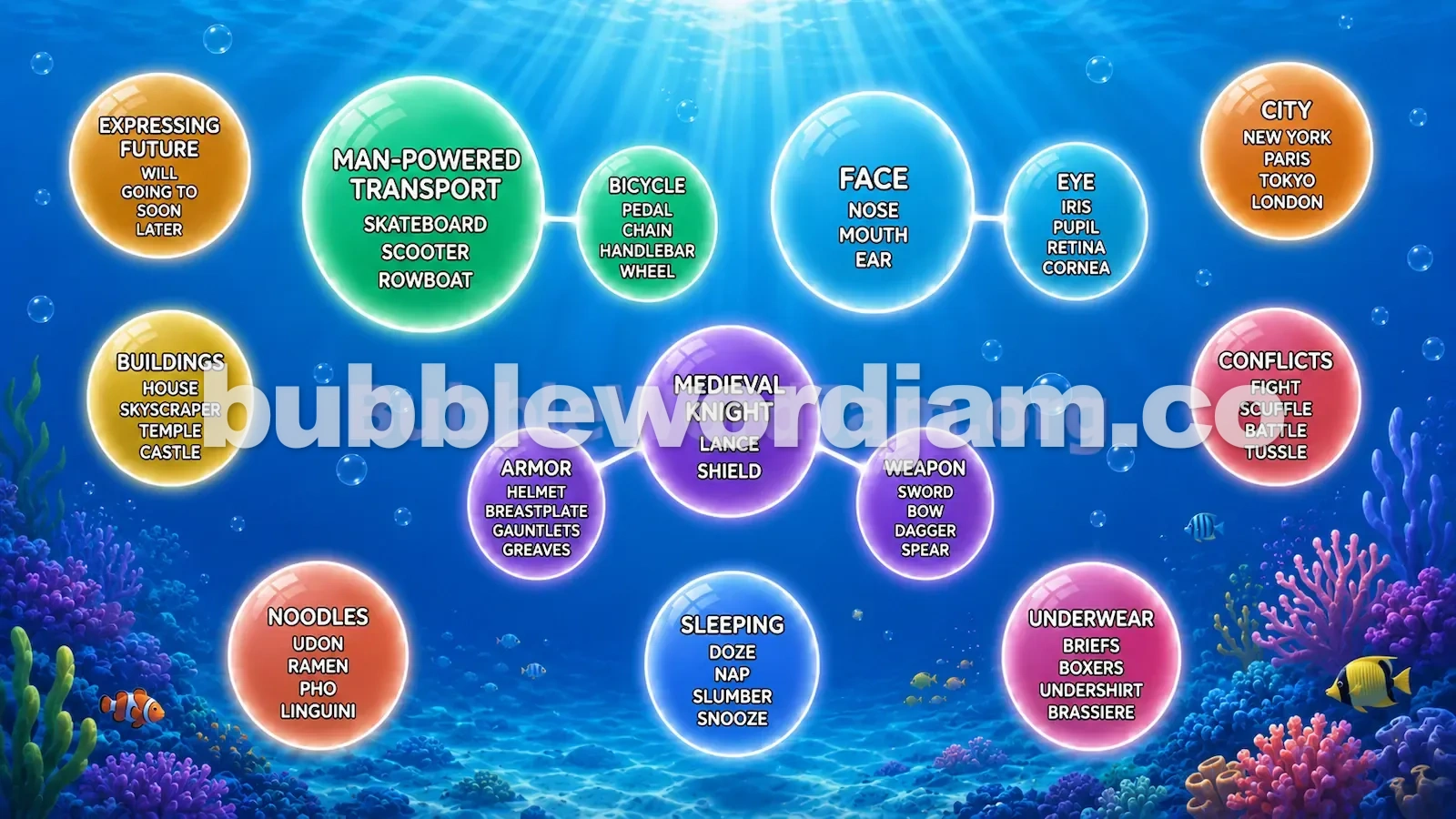 Level 143
Sort 40 words into 10 categories
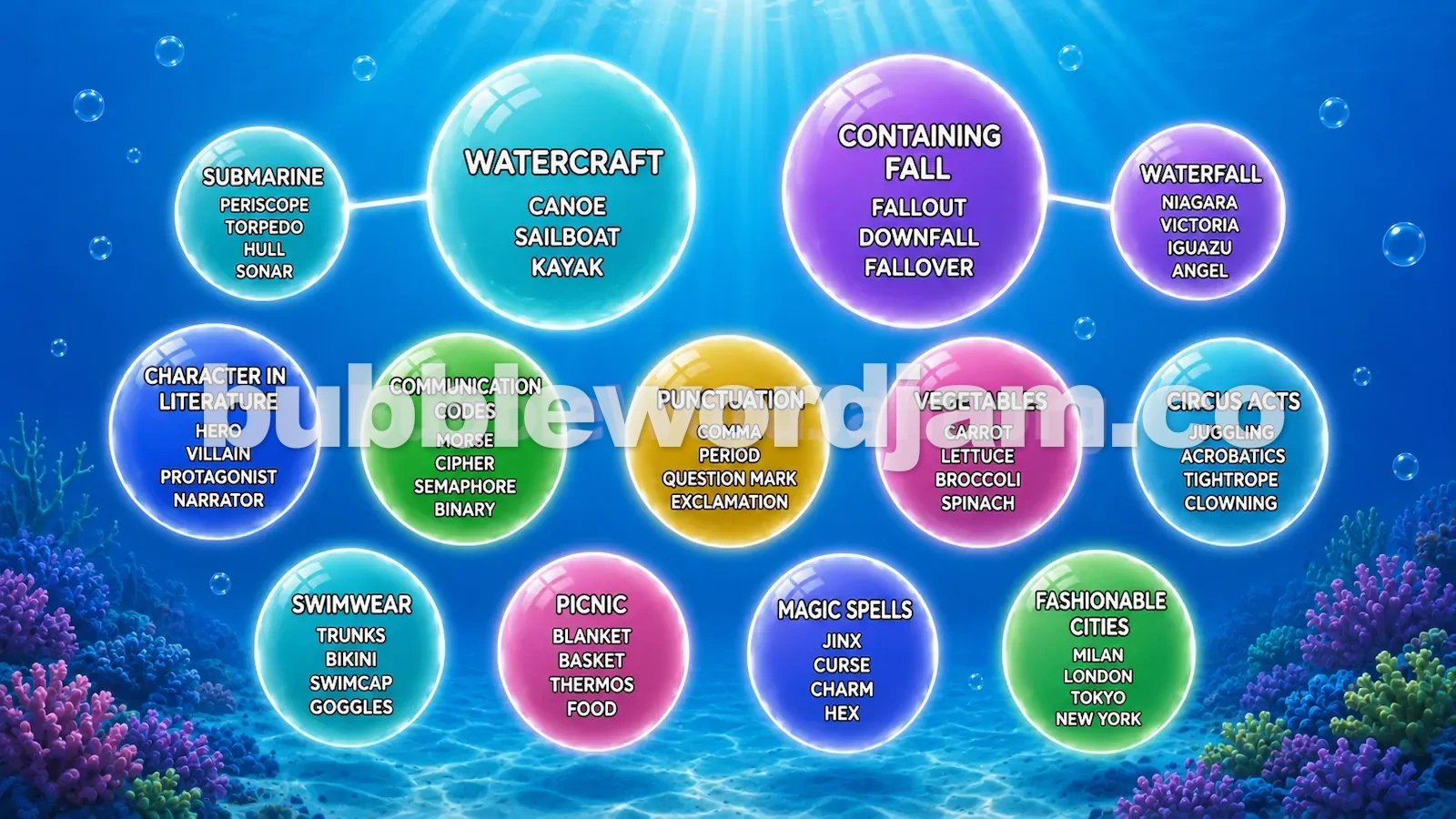 Level 147
Sort 44 words into 11 categories
 Level 298
Sort 36 words into 9 categories
Related Puzzle Types
Bubble Word Jam Skills FAQ
What does this skill mean in a puzzle?
Each level is built so that a specific skill decides your success. Understanding which skill a level tests — categorization, vocabulary, logical thinking, memory and so on — tells you exactly where to put your attention.
Why does this page list specific levels?
The levels shown here genuinely exercise this skill, based on their real mechanics (number of categories, nesting, domain words and abstract concepts).