Deduction
Deduction is inferring a rule or a theme from the evidence of the words themselves when nothing tells you directly.
What Is Deduction?
- When a theme label is abstract or a word fits several boxes, you deduce the answer from what you know is true.
- Completing the right group often unlocks the only consistent reading of the whole board.
How It Appears in Puzzles
- A nested category puts words that are themselves themes on the board, so you deduce which group is still missing.
- A word that fits two boxes asks you to deduce which box is already full.
Common Patterns
- Evidence accumulates group by group; each completed set narrows the remaining possibilities.
- The most consistent reading of all groups together is usually the correct one.
Examples
- given egypt, pharaoh, tomb, steps, deduce the one theme they all belong to.
Tips
- State the rule you are testing out loud, then check it against every word in the group before placing.
Related Levels
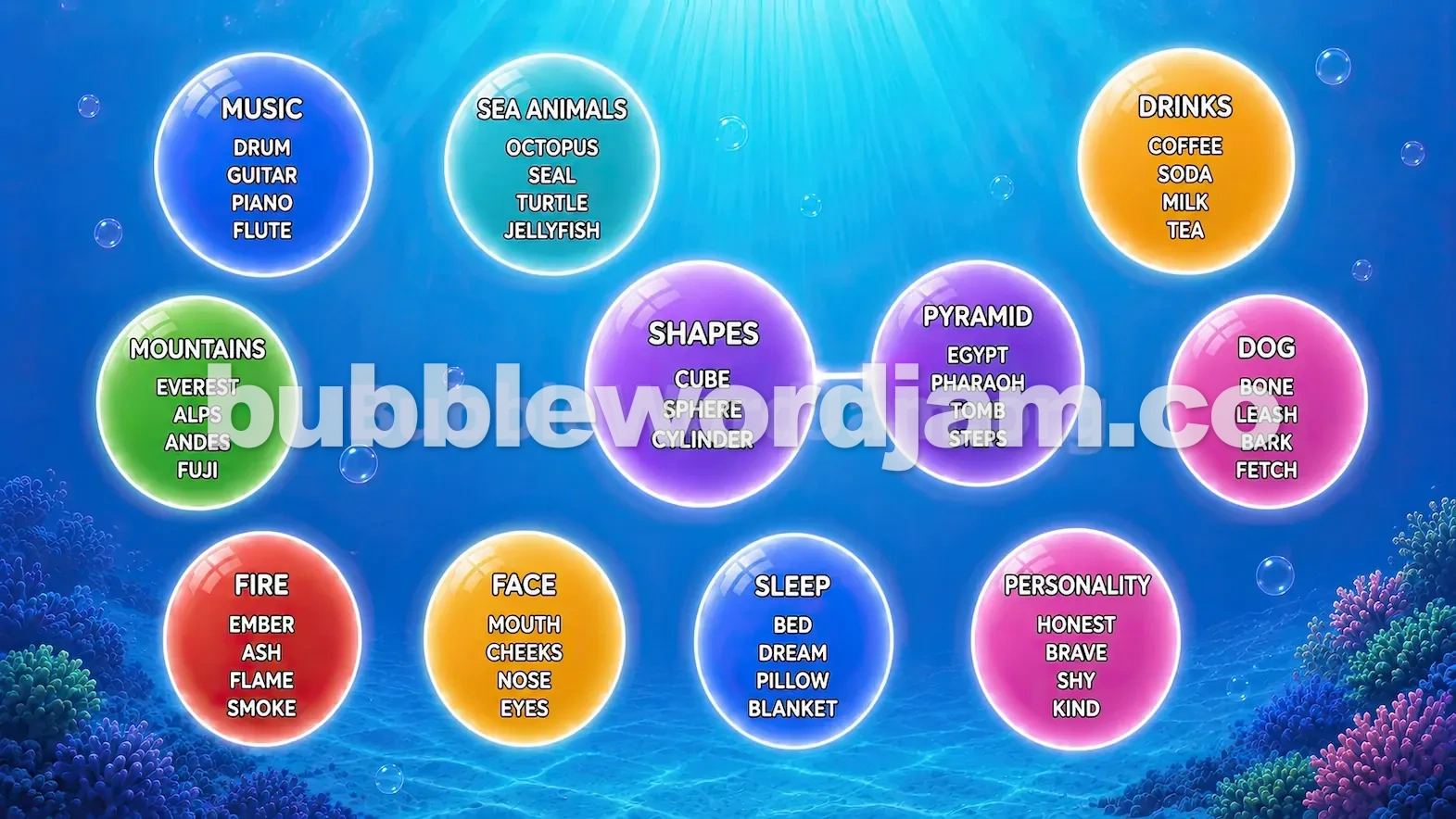 Level 6
Expert Nested Categories
Sort 40 words into 10 categories
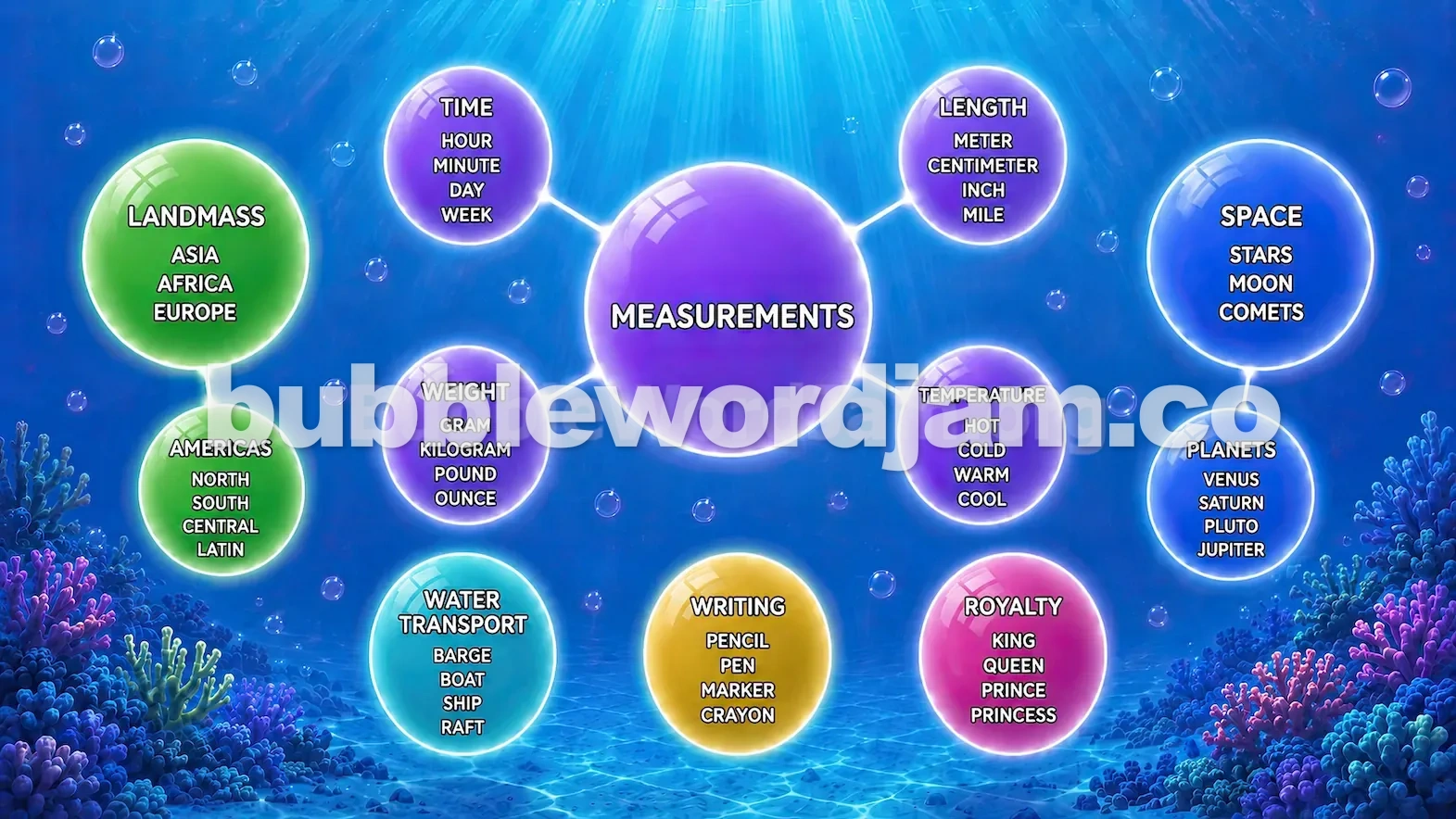 Level 7
Very Hard Nested Categories
Sort 24 words into 6 categories
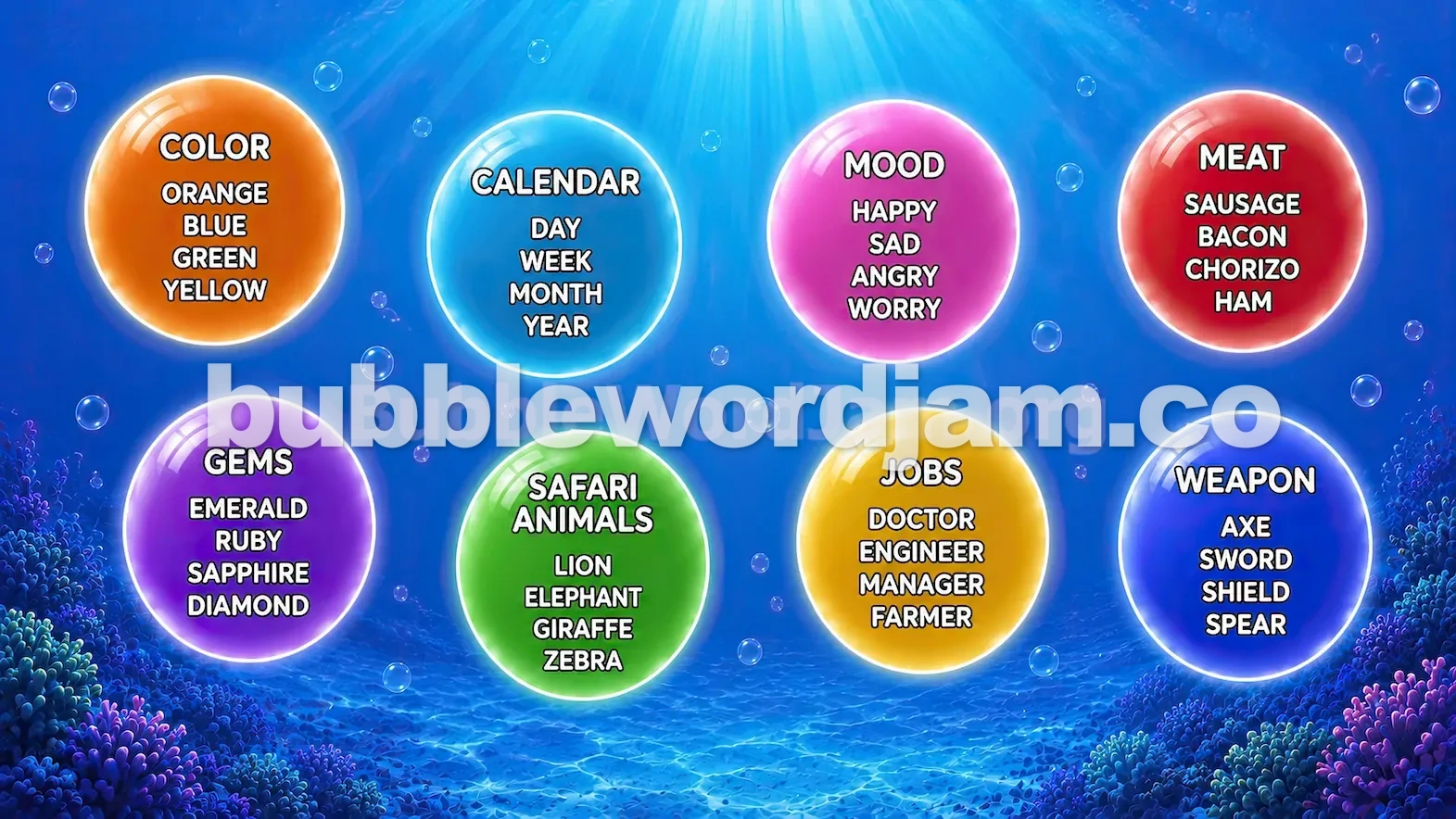 Level 10
Medium Word Sorting
Sort 32 words into 8 categories
 Level 28
Very Hard Nested Categories
Sort 24 words into 6 categories
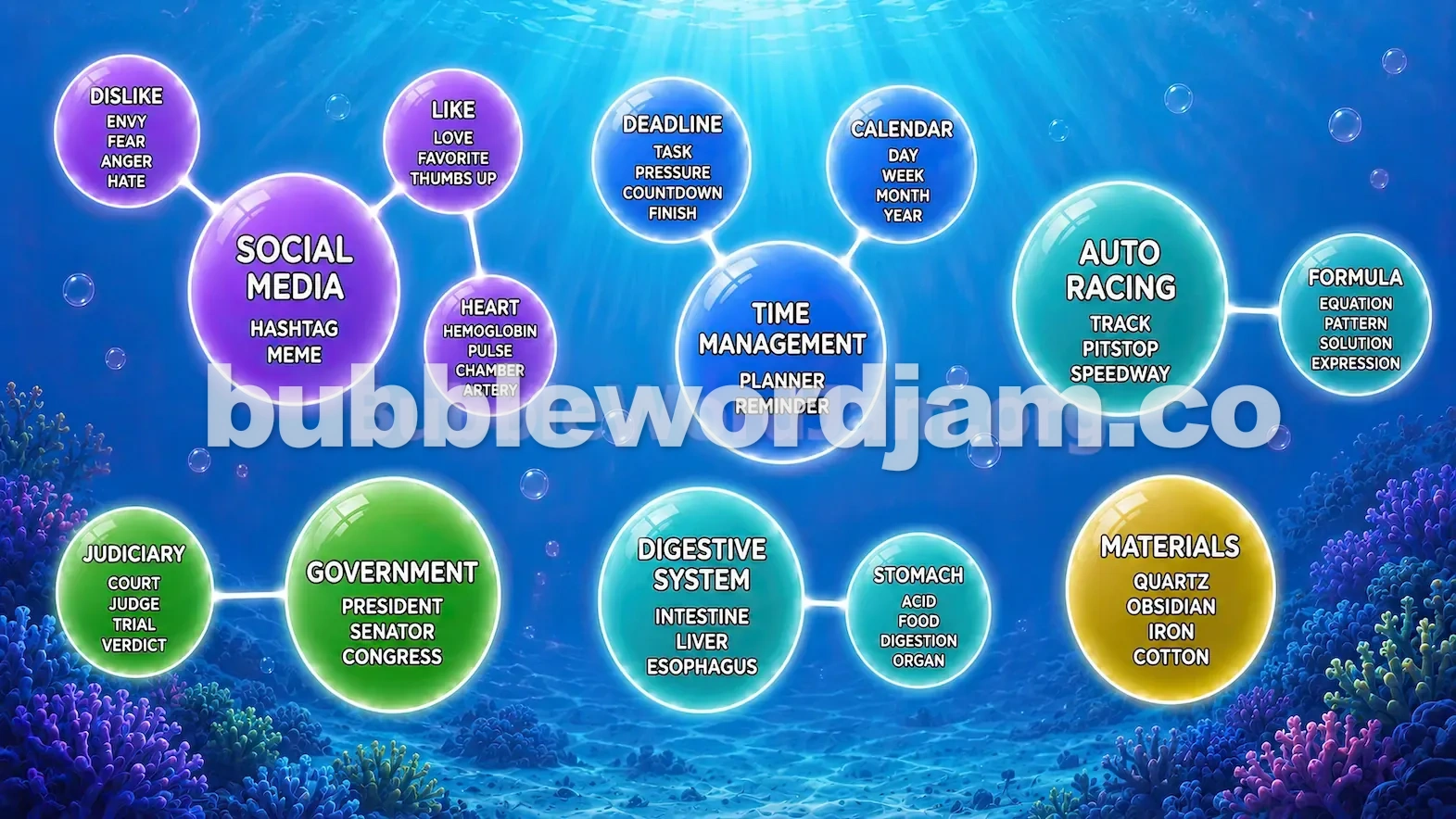 Level 55
Very Hard Nested Categories
Sort 24 words into 6 categories
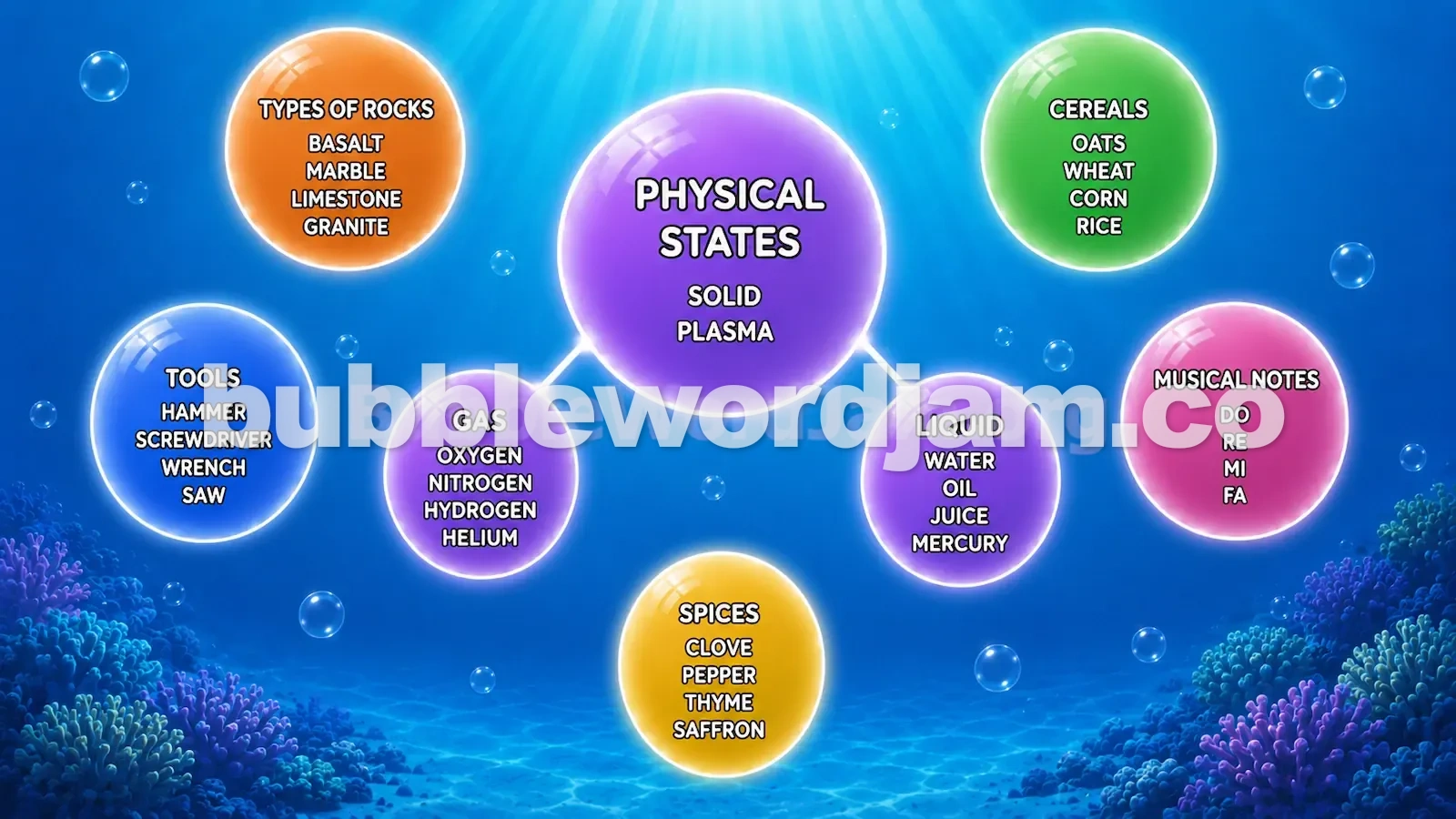 Level 80
Hard Nested Categories
Sort 24 words into 6 categories
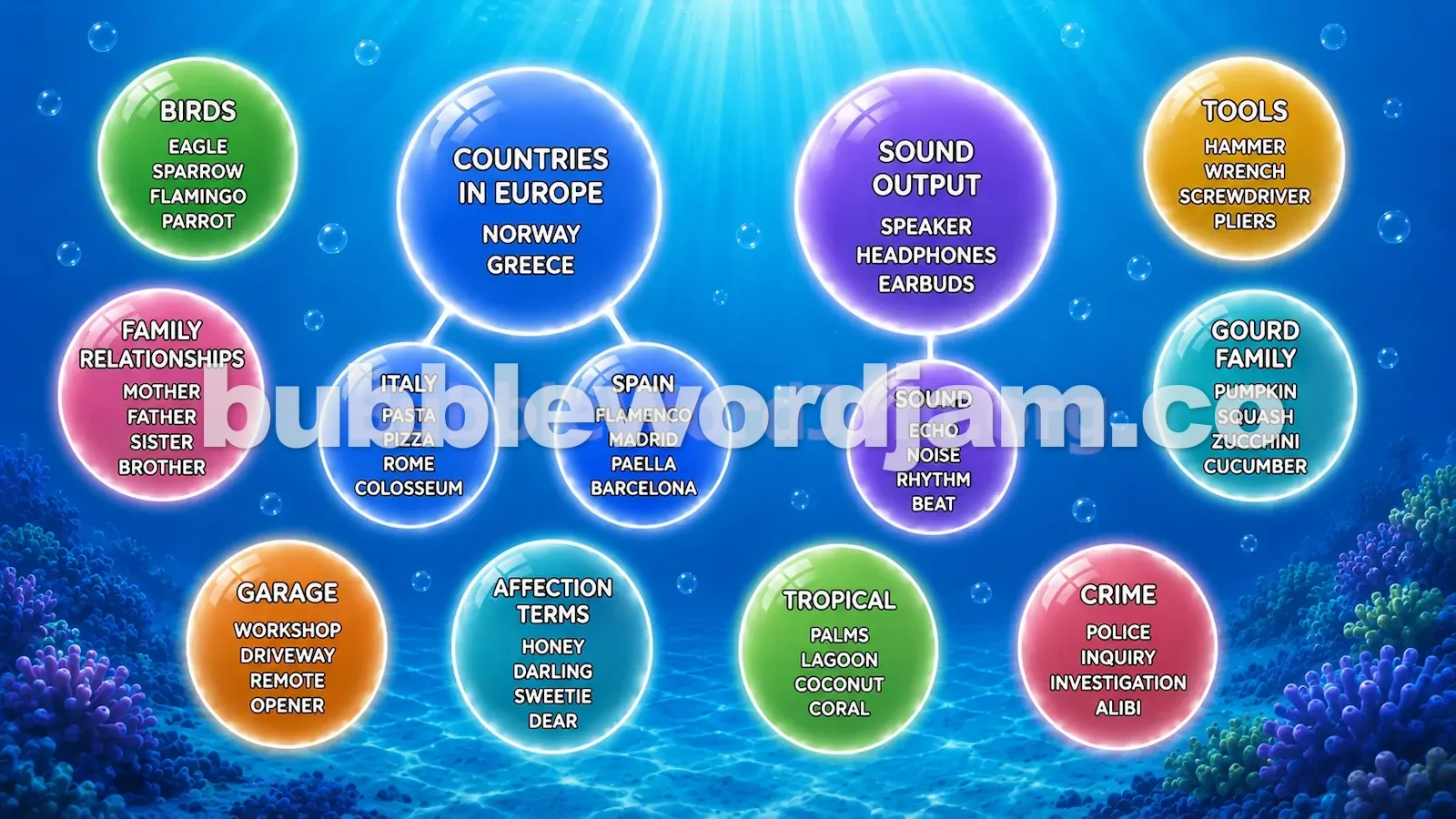 Level 137
Expert Nested Categories
Sort 40 words into 10 categories
 Level 298
Very Hard Nested Categories
Sort 36 words into 9 categories
Related Puzzle Types
Bubble Word Jam Skills FAQ
What does this skill mean in a puzzle?
Each level is built so that a specific skill decides your success. Understanding which skill a level tests — categorization, vocabulary, logical thinking, memory and so on — tells you exactly where to put your attention.
Why does this page list specific levels?
The levels shown here genuinely exercise this skill, based on their real mechanics (number of categories, nesting, domain words and abstract concepts).